

A chisel plough (also spelled “chisel plow”) is a type of deep tillage implement used in agriculture to break up and loosen soil without fully inverting it.
How It Works
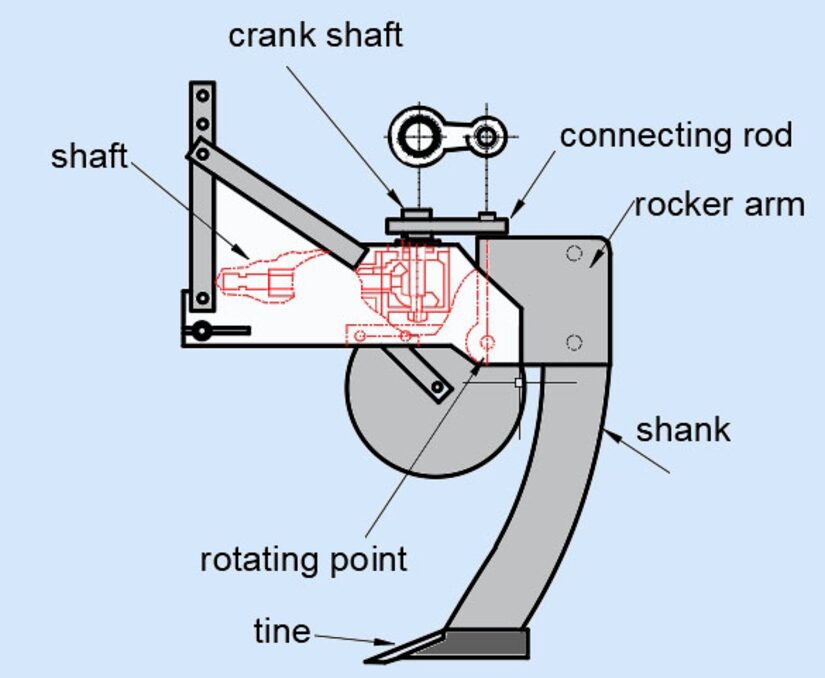
It consists of a frame fitted with multiple rigid or spring-loaded shanks (also called tines), each ending in a narrow chisel-shaped point or sweep. These shanks are pulled through the soil at depths typically ranging from 15 to 45 cm (6–18 inches), fracturing and aerating the soil below without turning it upside down the way a moldboard plough would.
Key Purposes
- Subsoil loosening — breaks up compacted layers (hardpan or plough pan) that restrict root growth and water infiltration
- Improved drainage — fracturing compaction allows water to move more freely through the soil profile
- Aeration — increases oxygen availability for roots and soil organisms
- Conservation tillage — because it doesn’t fully invert the soil, it leaves more crop residue on the surface, reducing erosion
Types of Points/Sweeps
- Straight points — for aggressive penetration into hard soils
- Twisted shovels — provide some soil mixing action
- Winged points — cut a wider path through the subsoil
Advantages Over Moldboard Ploughing
- Less soil disturbance and erosion risk
- Better moisture retention (residue stays on surface)
- Lower fuel consumption per pass in many conditions
- Improves soil structure over time
Limitations
- Doesn’t bury weeds or residue as effectively
- May require a follow-up pass with a disc harrow or field cultivator to prepare a fine seedbed
- Less effective at weed control than full inversion tillage
It’s widely used in dryland farming, conservation agriculture systems, and wherever breaking up compaction without full inversion is the goal.
Dr. Rajesh Nallaiah
📱 +91 9842841987
📧 rnragridevelopers@gmail.com
🌐 www.rnragridevelopers.com
RNR Agri Developers
🌾 One-Point Solution for All Agricultural Services
📍 Established in 2019